Gyms & Fitness Studios
Day lockers that never need a key at the desk
Quick answer: lockers for gyms & fitness studios in Singapore
Latchwork supplies keyless day-use and assigned lockers for Singapore gyms, boutique studios and fitness clubs. Where the only problem is keys at the front desk, standalone battery keypad locks solve it outright — members set their own code for the session, with no key to hand over, no wiring and no subscription. Where day lockers are being squatted or you want to sell assigned monthly lockers, connected smart access adds automatic release at closing and card-on-file billing, which no offline lock can do. Either way the retrofit route is usually best value for a small studio: keep the existing lockers and change only the locks.
What we usually find
If none of this sounds like your site, you may not need us — and we would rather you worked that out here than after a meeting.
The front desk is a key desk
Handing out locker keys, taking them back, hunting for the one that has walked off, cutting replacements. In a studio with two staff on shift, this is a genuine drag on the people who should be selling memberships and looking after members.
Day lockers get squatted
Members leave a padlock on and treat a day locker as permanent storage. The room slowly runs out of lockers, and the only remedy anyone has is a bolt cutter and an awkward conversation.
Locker storage is revenue you are not charging for
Members would pay a monthly fee to leave shoes and kit at the gym — plenty do at other clubs. Without a way to assign, bill and revoke lockers reliably, it is not worth the administration, so the revenue is left on the table.
Multi-site means multi-headache
Different locker systems, different key registers and different problems at every location, with no view across them. When you open the next studio you rebuild the same mess again.
What changes once it is in
- No keys at the desk, and no key cutting, ever — from keypad locks upward
- Day lockers release automatically at closing time, so the room turns over by itself (connected tier)
- Assigned monthly lockers sold as a paid add-on, billed automatically by card (connected tier)
- One dashboard across every location, with occupancy and utilisation per site (connected tier)
- Lock retrofit onto existing lockers, so a studio upgrade does not mean new steel
- A member locked out is resolved by a remote release from a phone, not a hunt for a master key
Which lock we would specify here
It turns on whether day lockers are being squatted. If the only problem is keys at the desk, battery keypad locks fix it completely — members set their own code per session, there is no key to hand over and no subscription, and for a single studio that is usually where we would stop. The moment compartments are being held overnight, or you want to sell assigned monthly lockers and bill for them, only connected access will do it: automatic release at closing and card-on-file billing are the two things a standalone lock cannot reach. Multi-site operators tend to go connected for the single dashboard alone.
Buy, or have us fund and run it?
Studios and single-site gyms usually buy: the volumes are modest, retrofit keeps the cost low, and the monthly locker fees are revenue you want to keep entirely. Larger and multi-site operators sometimes prefer the managed route to keep lockers off the balance sheet and get one supplier accountable across every location.
What we would specify
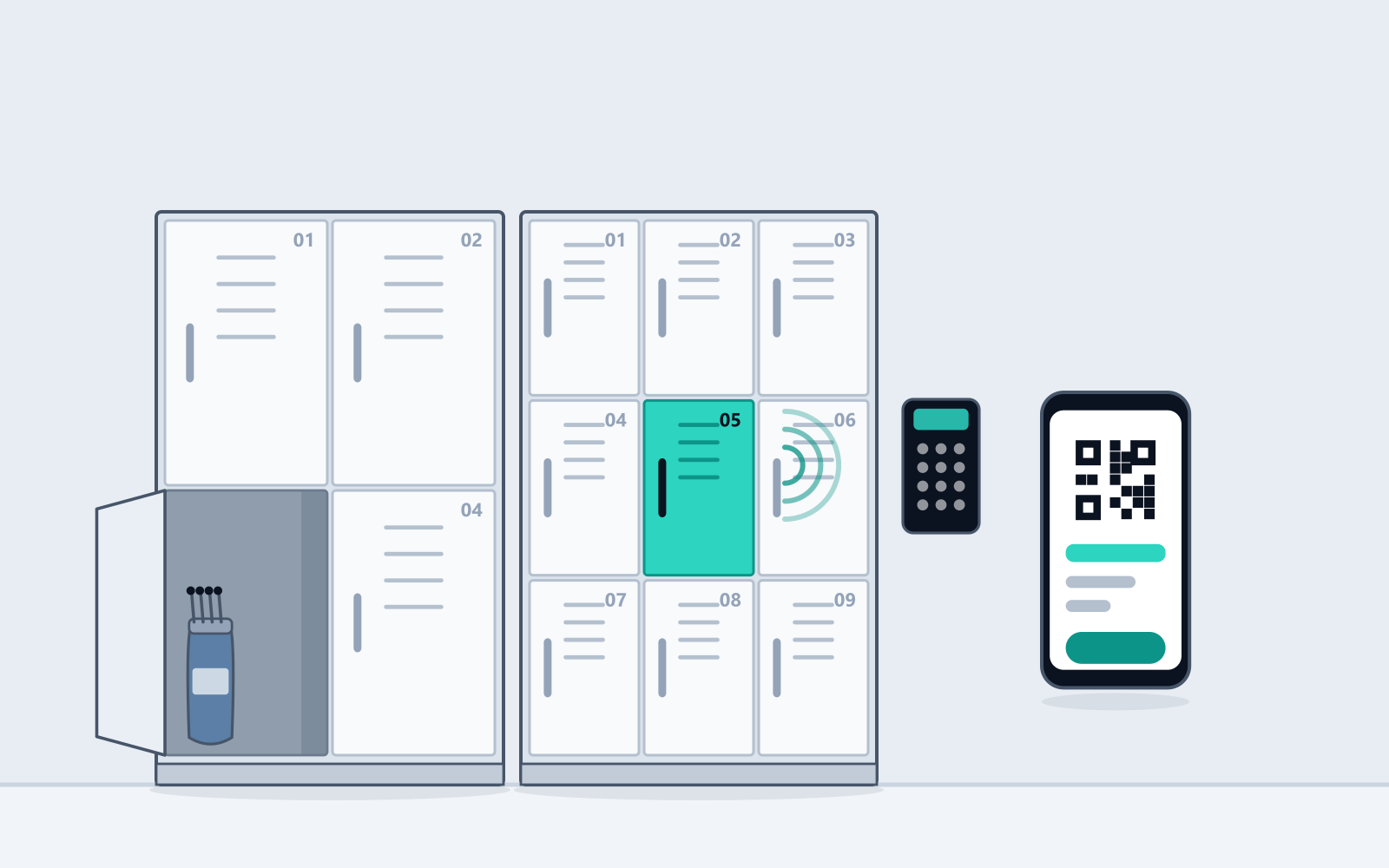
The families that come up most often for gyms & studios. A single room usually ends up with two or three of these rather than one.
- Keyed
- Digital
- Connected (our default specification)
Member Lockers
Assigned storage, with the lock the room actually needs
Full-height steel lockers in 2 to 24 compartments per bank, assigned to named members. Order them with keyed cam locks at the lowest cost per compartment, with battery keypad locks so nothing has to be cut or carried, or — the reason most clubs come to us — on the Latchwork platform, where members open with a QR scan or PIN, fees collect themselves and access ends the day a membership lapses.
Sizes & specification →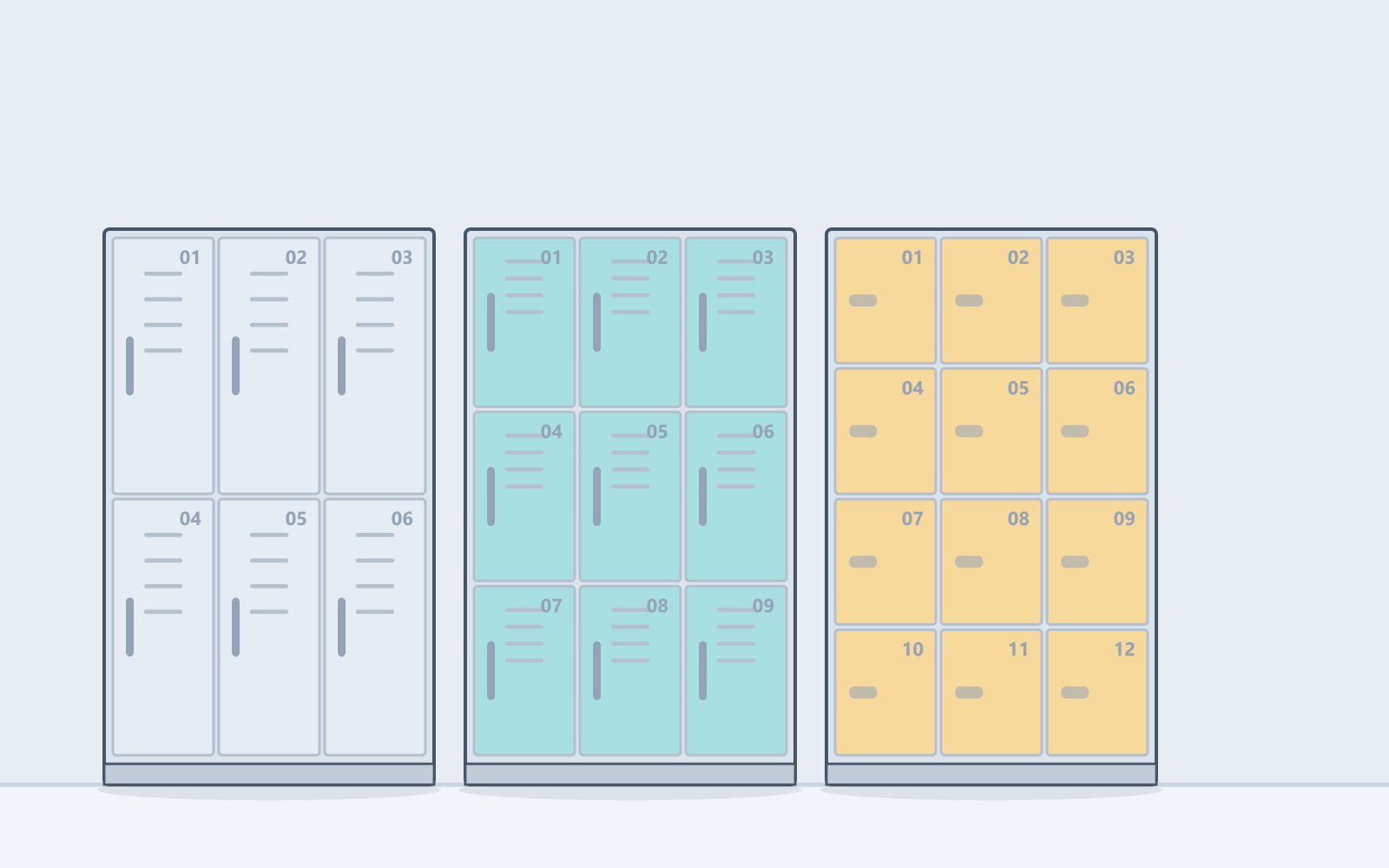
- Keyed
- Digital (our default specification)
- Connected
Changing Room & Staff Lockers
The proven steel locker, at whichever lock tier suits
Conventional full-height changing lockers in 2 to 24 compartments, built for wet areas and daily churn. Cam locks and padlock hasps at the lowest cost per compartment, battery keypad locks where the real problem is keys going missing, or connected latches where the room has to clear itself at closing. The shells are identical, so the lock is a decision you can revisit without replacing a cabinet.
Sizes & specification →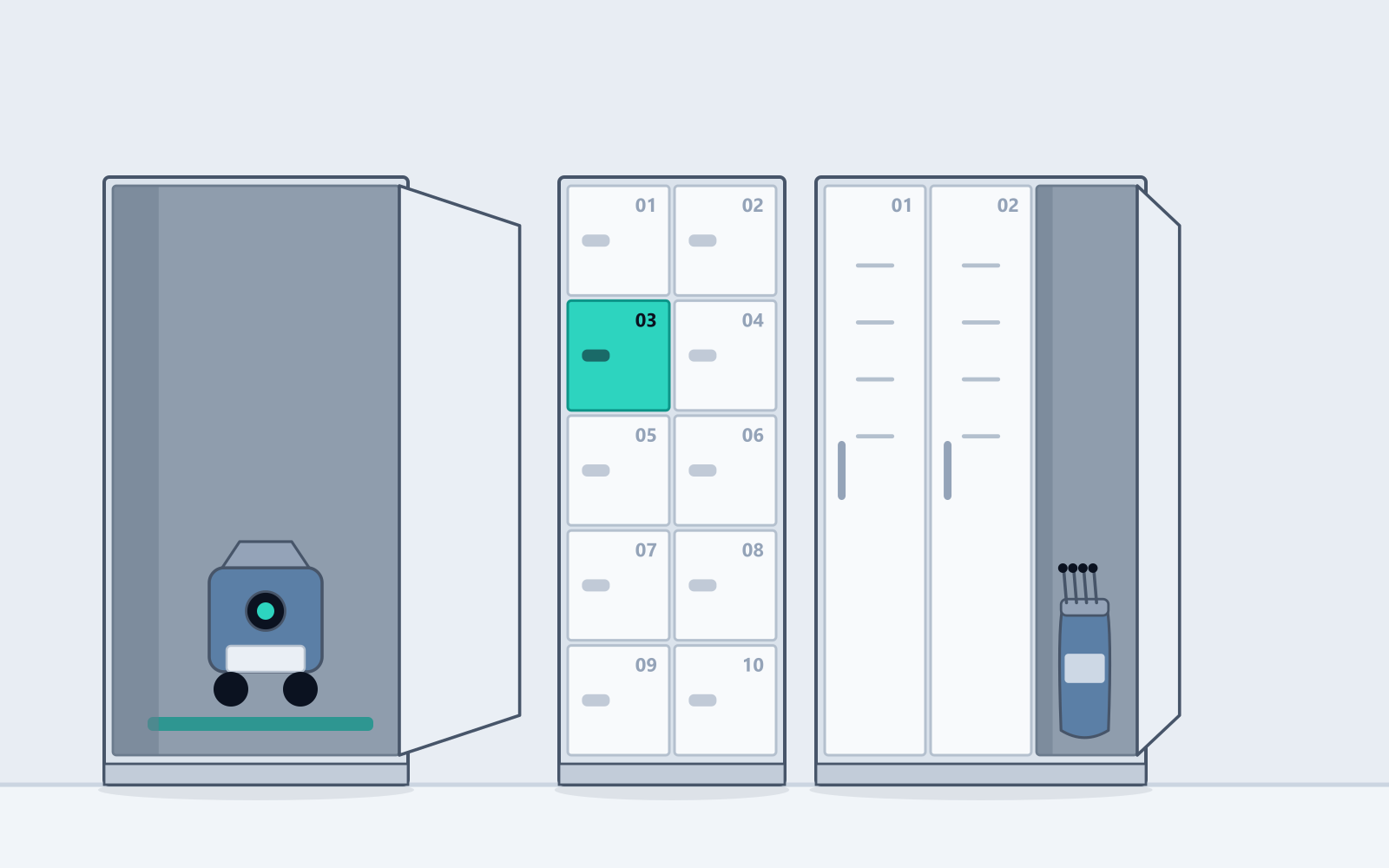
- Keyed
- Connected (our default specification)
Bespoke Equipment Lockers
Purpose-built housings for the awkward, valuable and shared
Where a catalogue compartment will not do, we build the housing around the item. This is the line Latchwork grew out of: our first cabinets were designed to hold, charge and dispense professional tennis ball machines unattended at a public sports centre, and the same approach applies to anything bulky, powered or shared between many users.
Sizes & specification →Gyms & Fitness Studios — questions we get asked
What is the cheapest way to make our existing lockers keyless?
Drop standalone battery keypad locks into the cam lock cut-outs you already have. No controller, no socket, no cabling, no subscription — members set their own code per session and there is nothing at the desk to hand over. You keep the steel, which is the expensive part, and change only the locks. For a typical studio with two or three banks this is a fraction of the cost of new lockers and the room is out of service for about a day. The same cut-outs accept connected latches later if you decide you need automatic release or billing.
How does a day locker get released if a member forgets to empty it?
This is the one thing a keypad lock cannot do, and the main reason studios move up to connected access. On the platform you set a rule — release at closing, or after a fixed number of hours. It notifies the member first, then unlocks the compartment and marks it available, with contents going to a lost property process you define. A standalone lock has no clock and no idea whose code is inside it, so a squatted locker stays squatted until someone cuts it open. If squatting is your actual problem, keypad locks will not fix it.
Can locker fees be charged through our existing gym management system?
We can collect locker fees directly by card through the platform, which is the simplest arrangement and needs nothing from your existing system. Where you would rather have everything on one member invoice, we can export the assignment and billing data for your system to charge against. A direct integration is possible with systems that publish an API, and we will be straight with you about the effort involved before you plan around it.
Do the lockers work if the internet goes down?
Yes. Standalone keypad locks are not connected to anything in the first place, so an outage is irrelevant to them. On the connected tier, PIN access continues to work with credentials cached on the bank controller, so members are not locked out; what pauses is new assignments and remote release, which resume when the connection returns. Every unit at every tier also has a mechanical master override.